Preloader Image

There’s no accounting for Social Impact

As the world turned its sights on Social Impact, demonstrated by businesses and companies in the last year or two, and the term ESG (Environmental Social Governance) became commonplace, businesses have started to build this into their new plans.
Why?
 Because Investors and lenders were demanding evidence of activity
 Customers and consumers insisted on good credentials
 Employees were making this a pre-requisite of their employment contracts
 Government contracts insisted on strong evidence to award a reserved average of 30% of the awarding tender marks
In short, it was realised that those businesses who could evidence social value delivery as part of its strategy, and not just as an afterthought, were more likely to BE in business in five years. With sustainability improved, risks reduced, and the collective businesses contributing to both the planet and to local communities
SO, the scene is now well established.
Sales, investment and loans, employee retention, and lower costs, can all be accessed by demonstrating Social Value
Social Impact is now worth real MONEY and real PROFIT
Here is the problem
The way in which the social impact is measured is still based ostensibly on either a corroboration of various systems (Finance, HR, training), or is somehow consolidated into a master spreadsheet, often as a summary of lots of other spreadsheets dotted around the business, each with a different owner, with varying priorities and targets.
The challenge with the above is that there is often no verification, no confirmation by a third party, that the activity and the effort, matches with the declared outcome
In other words, it is open to being fabricated, extrapolated, or wrongly interpreted.
But this cannot be so, if institutional funds, structured competitive tenders, or legal contracts are reliant upon this data being correct and truthful.
You cannot simply present your finance position on a spreadsheet each period and instruct your accountant to file them at companies house, and for HMRC to simply trust you that they are correct.
No, they are audited against data ledgers and nominals in the accounts package, which in turn are reconciled against the bank account statements. This is done to offer proof of position and is a legal requirement of each serving director to undertake.
In August 2022, you may have seen several large blue chip UK companies, becoming investigated by the Competition and Markets Authority (CMA) for making statements about their social impact, that could not be substantiated and could be not true.
It doesn’t matter if they were true or not at that point in time, as the damage was already done by an unforgiving social media news feed.
The awful thing, is that their data, the marketing statements, and the qualitative statements were all generated by many team members, and the directors had no way of knowing or checking their accuracy, yet it is they who are legally responsible.
So, my good readers, who are people with high integrity, and would not seek to make misleading comments, gain pecuniary advantage by extrapolating numbers, or create impact statements out of a story book, to gain access to contracts or funding, this is the problem.
It is now not enough to say, “trust me”, nor enough to be diligent in the preparation of your Social Value data sets. It is time to adopt a system, much the same as a financial accounts system, to protect your company, your brand, your own reputations, and your staff.

In short you need an accounting system for Social Impact.
1. It must be able to record each action taken, in a way that is not changeable- therefore fully auditable
2. Where possible, it should provide an audit trail back to the individual person/ employee, who offered that help
3. It must be verified independently, by the community groups/ charities, or causes that you are helping
4. It should provide transparency, and reporting to confirm the numbers and qualitative statements
5. It should have sufficient flexibility to be able to record any aspect of Social Value that you externally offer, be that Environmental or Social
This is the often overlooked “G” in the ESG map. The G stands for governance, which is designed to protect individual directors against unprovable claims, of actions or outcomes, sometimes called fraud. It also protects the company, and its brand and reputation
In summary, the G is the insurance policy, in a world of rapidly increasing scrutiny.

If you are a senior leader in your business, a director or non-executive director, and you would like to know more, or discuss the challenge of “Accounting for Social Value”, contact me at philip.webb@investorsincommunity.org

Company Events With A Strong Social Impact: Effective Team Building Through Charitable Giving

Many companies organise charity events in order to give back to communities. As we’ve previously discussed, these events allow businesses to establish their social values while also boosting the physical and mental health of the volunteers.

For that reason, many companies opt to package charity events as team building programmes for their employees. The sense of purpose and fulfilment derived from performing good deeds translates into a deeper relationship with team members, which thus results in better productivity and performance.

While the right connections and planning helps, teams can only go so far without the right leadership. One reason why leadership has become more demanding is that there is now an extra emphasis on areas such as humanity and purpose. The good news is that leaders are responding to this shift by creating new social initiatives. This became particularly prominent during the pandemic. Good leaders proved themselves to be empathetic, implementing flexible work policies or remote setups to keep up with the demands of the industry, as well as the workforce.

The pandemic highlighted that many challenges can only be overcome through resilient bonds amongst community members, which is why giving back has become a common goal in business. To get your company started, here are a few ideas for events that focus both on charity and effective team building.


Volunteer days off

Instead of a monetary donation, companies can choose to donate their time to a cause. This can be done by providing employees a day off their regular schedule every month to volunteer at a soup kitchen, take part in a charity run, or help at a homeless shelter. The Trussell Trust is a good food bank to start with due to its numerous centres across the UK.

These service events make use of assembly lines to guarantee efficiency, which will build communication and trust amongst team members. The repetitive nature of the work also provides plenty of opportunities to fine-tune your employee’s coordination skills. Everyone works as a team to avoid any supply chain interruptions, which can disrupt the entire process.

This also assists charity service organisations that often struggle with a lack of manpower, and employees may be encouraged to volunteer even outside of official work-endorsed events.


Corporate fundraising

It’s normal for companies to hold regular team building activities such as game nights. To take these game nights to the next level, you may want to transform them into a fundraising activity for social causes that require monetary support.

For your next company bingo night, a small donation can be required at the door for each bingo card received. Organising this type of event will require different departments to work together, and this can be a good way to get people who may not usually have much contact with each other to work as a team. You could also use this event to get team members to swap roles in order to get a better understanding of the different departments.

Or, if you’re doing a team bowling tournament, pledges can be set for every strike made. The fun and team building aspect of the games remain, while the funds collected can help with supplementing the company’s CSR and be donated to a chosen charity afterwards.


Charity drives

Companies can also coordinate directly with charities to launch a charity drive and start a collection for a particular cause. This can be useful in cases where a business can lack the means to raise funds internally.

For example, companies can partner with Wheels to Heal to address the need for wheelchairs for disabled adults in England. Disabled adults were found to make 26% fewer trips than those without a disability, and fundraising for wheelchairs could improve their quality of life. Launching a charity drive would utilise the marketing and project management skills of team members for a social cause. It would also make use of the company’s consumer base, which in turn would demonstrate to them how the company is working together to be a better community business.

A combination of the different kinds of events that focus on charitable giving is the best way to maximise the benefits of team building while helping the community. Investors in Community is a digital platform that can help companies coordinate, track, and verify these initiatives so that employees see the value in their workplace and co-workers, while employers benefit from happy, productive, and socially responsible employees all year round.

Exclusively for investorsincommunity.org by Jacqueline Fox

Social Impact or Social Unrest?

IIC Transformation Programme

I look around at the myriad of pressures on society this month, ranging from the ever-higher home energy costs, car fuel costs, rising food prices, interest rate increases, and the apparent widening of the divide between those who can afford to live through this period, and those who will need help, and probably need to make lifestyle-limiting choices, as to how they exist into the winter of 2022 and into 2023

I am sensing that we are all approaching a crossroads, that means that there are three ways to go forwards:

  1. Keep Calm and carry on
    1. Rely on government support to be able to afford to live
    2. Or you have sufficient money and resources not to worry too much anyway
    3. “I’m alright Jack” approach, where “self” prevails over community


  1. Social Impact
    1. Start to knit communities together, businesses, charities, social companies, and Individuals – to provide co-support to help those in need, and start to “Level Up Society”
    2. Promote people-through-recognition, to volunteer, gift, and support those who need help
    3. Engage companies to spill out into their local community, to provide help and resources, promoting themselves as a great social impact company


  1. Social Unrest
    1. Where people get fed up with the unfairness, the gigantic “company” profits versus the family without food or heat in their houses, and survival is a matter of luck or a postcode
    2. Where unrest grows to active protests
    3. Where protests grow to violent reactions


It has been said before that the move from polite society to anarchy, takes just three weeks given an opportunity or event. For those who remember the Poll Tax Riots of 1990, you’ll understand this context

They say, it often takes a disaster or a war, to create the shock conditions for people based behavioural change, but the combination of adverse factors we are all currently facing, must surely be an equivalent?

Which path will unfold?

What choices can be made, to avert social unrest, create a joined up, fairer community, and start to close the societal divide, based on compassion and fairness, to create sustainable caring communities?

At Investors In Community, we have the method and the systems to create a solid option 2, and help communities achieve Social Impact, and a positive way forwards.

If you want to know more, contact info@investorsincommunity.org

The Social Value Tsunami is on its way, are you ready?

With Social Value now becoming monetised, both in Government, Local Government and now in the business supply chains, what can we learn?

The larger Enterprise businesses already report on their Social Value activities, both Environmental and Community focus, and provide written and published statements

Like GDPR before it, Social Value will cascade down the supply chain, to reach every business of every size within the next year.

There may or may not be a statute law to report by then, but there will be irresistible commercial pressure to conform and report

For now, the imperative for business directors should be the following

  1. Bring this to the regular board meeting agenda, it is a critical risk to your business and should have a director assigned to the task
  2. Engage with your teams internally, to ensure a joined up and fully understood strategy is devised
  3. Translate this strategy into operational action. You do this for Health and Safety and GDPR already – now do it for Social Value
  4. Review and revise your policies to safeguard your business and your employees
  5. Understand your activity, and make a plan for the periods ahead
  6. Audit your measurement systems. Spreadsheets are no longer acceptable, as the data you confirm needs to be to an auditable standard
  7. Check for fraud, the same way you do for the finance function
  8. Engage a Social Value accreditation, as a starting point for your next steps
  9. Utilise external reporting platforms that allow transactional audit. Investorsincommunity.org provides this for all Community work, and emerging platforms allow Environmental audit recording
  10. Avoid any system where a judgement-based self-input is required by a staff member, as this is where the control and audit falls over, leaving the directors exposed. There are lots of “portals” for example that ask you to input your own data but does not verify any of it.
  11. Avoid fancy reports, and be authentic in your statements, backed by auditable facts

The Social Value journey is just starting. From new-born to adulthood in just a few years, with commercial pressures exacerbated by Covid, fractured global supply chains, and the war in Ukraine

We are in a changing world, but anyone who understands bell-curves will tell you – delay too long and your will miss the profit curve, enjoyed by those who act now

At the end of the day, Social Value is a euphemism for personal values, irrespective of the legal or commercial positions. It touches everyone on this planet who cares, from our employees, our customers, our investors, our secondary stakeholders. Personal values make the world go around, and this just became centre stage.

If you need support to devise an actionable plan, install Social Value as a profit driver, find and deploy proper auditable measurement systems, and want to engage your team, I’m here to help. Contact me direct on philip.webb@citercom.uk

Like a baby, born with no teeth, the attributes of Social Value

Social Value was first described as CSR (Corporate Social Responsibility) and then ESG (Environmental Social Governance) and were a “nice to have”

It provided companies with the framework to describe their actions that supported others, driven by good will, philanthropy, and a desire to expand both leader’s egos and marketing footprints

Then came the Social Value Act amendments of January 2021, that enshrined a minimum of 10% of the awarding marks in a public sector tender, to the stated Social Value that a business returns to its community

There was recognition that a company who supported the planet and community, was in some way a “good business” to work for, buy and sell from, and maybe invest in

Then the baby grew a bit, and gained teeth

Local government led the way in the spring of 2021, expanding the 10% requirement of the Social Value Act, to a level of 25% and 30% of the awarding marks in a tender submission

So, if you want to win work from local government, you need your good news stories laid out to showcase your social value. The huge push by the environmental lobbies provided a backdrop to look at carbon footprint, and all its vague emerging measures.

However, the general thrust of Social Value from a business although not fully defined, is a good one. Nobody can argue that protecting the planet, the people, resources, and communities is a bad thing.

So, the term Social Value (generic umbrella for CSR and ESG) has grown up to become an adolescent.

Legal teeth have become evident, to start to combat the problem of “greenwashing” This term describes the situation if a firm can derive the benefits of ESG without implementing the changes required, they will do so, if it’s easier than meeting the standards. In other words, the outcome or impact is extrapolated, glossed up a bit, made to be more than reality.

The reason businesses can and do this is simple, there are no defined and measured standards in place, that bind them to the truth, or the accurate impact outcomes.

All of that is about to change.

As Social Value reaches metaphorical adulthood, a few changes are afoot.

The question of measurement is still to be fully solved, and is being addressed as this blog is written, by a myriad of “accreditation” agencies. These organisations use best efforts to define standards, derived from academic feedback, hypothesis, and some anecdotal evidence of causal outcomes in a small number of companies who presently engage. They undertake audits, test business claims, guide companies towards a more structured approach, making Social Value a business driver, no longer a “nice to have”, but a “must have”

The Accreditation Marks have a valuable place in the market, as they all add a layer of credibility, above the basement position of alleged greenwashing.

In Community terms, there should be a new term, perhaps called “Community Washing” The lack of verification of claims to have supported community organisations, charities, and schools, makes this the next ground to be tested.

If you need support to devise an actionable plan, install Social Value as a profit driver, find and deploy proper auditable measurement systems, and want to engage your team, I’m here to help. Contact me direct on philip.webb@citercom.uk

Peter Schriewersmann works alongside Investors In Community to raise funds for ambulances for Ukraine.

Peter Schriewersmann, a partner in Hotel Anfield, launched his project on the Investors In Community platform to raise money for the purchase of a number of ambulances to gift to the Ukraine. The charitable giving platform, IIC, helps firms to find good causes that need help in their local area. As well as measure, record and report other fundraising, donations and volunteering to show the full extent of their social responsibility.

When he heard of the situation in Ukraine, Peter asked himself: “What can we do, that will have a tangible impact?”

Regarding the project, Peter said “Never ever have I felt as committed to a cause as I do to this one. What is happening in Ukraine is horrendous. A proud European country might cease to exist, I still struggle to comprehend. It makes certain things feel so much less secure.

My wife Joanna, who is from Poland and massively involved with the regional Polish relief effort, has inspired me massively. Last week, she told me, that the Ukrainians are massively short of ambulances. I have seen small numbers of donations of ambulances being made … I spoke to my cousin Thomas, from Rietberg, Germany and he has a close Dutch connection who currently has 11 used Mercedes and VW ambulances for sale. They dropped the price for all of those ambulances to 150000€ plus 5000€ for accommodation, petrol etc.

This project will make a tangible difference. It will save people’s lives. Us ordinary people have the power to make an extraordinary difference.”

In a time where many people were lost and in severely stressful situations, Peter, his friends and family stepped up to provide this support. It was also a difficult time for us to know exactly where we as individuals could donate to support the aid for Ukraine. Peter brought to light something many of us overlooked and enabled many people to offer their support in a way they had not previously thought of.

Peter and his team raised a staggering £30k+ and they were able to successfully drive the ambulances across to Poland for safe delivery into the Ukraine.

Peters kindness and generosity has inspired many and we are thrilled he chose to work with Investors In Community to achieve this incredible feat.

If you’re interested in creating your own charitable project, you can do so here: https://investorsincommunity.org

ESG Pace Quickens – Can Charities Keep Up?

The principles of Environmental, Social, Governance is now becoming embedded within businesses who wish to have a future.

Sustainable businesses, from the big corporates to the micro-companies, are now being driven by ESG/ Social Value positions, and the assessment and timeline for compliance is now unforgiving

Supply chains are now adopting measures and insisting on provable metrics to show that the business supplying goods and services is serious about the principles of caring for the Environment, and connecting with the Community, in a way that is verifiable, and reportable, and to an auditable standard

So, what of the Charities and organisations to which the businesses donate money, volunteer, and gift?

Here’s the problem in two parts

  1. The Businesses, in the way that ESG is being driven across all industries, are no longer GIVING, they are BUYING from Good Causes. They are buying an IMPACT statement, that proves the support, to the standard that they require for their business
  2. The audit process within the business supply chains, is now spilling over to the Charities and Good Causes, as “suppliers” to the companies

This shift is both swift and brutal, in the way that Good Causes need to respond, or lose out on huge amounts of support from businesses

The age of pure altruism, if it ever existed, is rapidly disappearing, in favour of the frameworks of reporting that are now demanded

Charities in the main, appear totally unprepared for this lightening pace shift, and need to adopt a strategy and set of actions to showcase themselves, or risk losing the support of businesses across the land

It is a make-or-break position for many charities and social organisations, in the next 9-12 months, as businesses are aligning swiftly to this new requirement

There are again two aspects to consider, as a charitable organisation

  1. Do you have the necessary approach, systems, and reporting in place to be able to show that your OWN activities are compliant, and align to the ESG framework?
  2. Do you have a set of verifiable measures, that allow you to present this report to a business who wishes to support, or continue to support you?

The third question relates to the auditability of these measures and reports. Spreadsheets and self-entered data collections, are NO LONGER acceptable

Organisations, be they businesses or charities, community groups or not for profits, corporates, or SME’s need to bring that matter to their board meetings now, without delay

The measures needed will be:

CO2e – the carbon emissions attributable to the actions of the business or charity.

Community Credits, or equivalent unifying independent measure, brought about by the acts of giving (donations, volunteering, gifting) from the business to the Good Causes.

Finding a methodology to verify these measures, is brought about by an assessment, audit, or independent awarding body, who will check and pass the measures as being real and robust.

For the environmental impact all organisations need to establish a base-line carbon footprint measure, by an external body, that can become the starting point for continuous improvement.

For Social Impact, Investors In Community provides the means to show the Community Credits, for all outreach activity and support.

Time is now of the essence for organisations, both business and Good Causes, to take swift and decisive action. To ignore this as some passing fad, is a mistake that will cost dearly.

Trustees, as with Directors need to plan, and execute as quickly as resources will allow. If the timeline looks protracted, consider engaging external expertise and specialist resource.

Social Value, and ESG, and whatever acronym you prefer, is the main subject of boardrooms in 2022. It is the framework and catalyst for change, that will drive our society for the coming decade.

Take positive steps now and secure your organisation’s future.

Is it Levelling up our Economy or our Society?

Political leaders are currently pushing the message of “Levelling Up” our economy. For too long, they say, the divide between the South of England, and the rest of the UK has deteriorated and widened.

Quite right too, that the distribution of infrastructure and government spending needs to be allotted fairly across the regions and the population

However, I cannot help but feel sceptical.

Nothing to do with politics, or the government in power, this is to do with the strategy of focusing on the economy.

All well and good to build some new roads and rail connections, improve bus routes, high-speed broadband, and relocate some government departments out of London to the chilly north.

But what I am concerned about is the people themselves, and the society in which we live.

Governments of any political persuasion cannot reach the person in the street, as their influence and effect is designed to engage down to the regional levels, and is then taken up by other organisations, such as Councils, support groups, charities and communities themselves

If I am an elderly person, living alone, and declare – “I feel so lonely, what is the government going to do about it” then the answer is nothing. At a community level, however, there are many support options, headed by council services, social and care organisations, and charities.

During the pandemic, we were able to literally see into the living rooms and personal lives of our teams, our customers, and our suppliers. It formed a new understanding, based on being human, and not simply a contract.

This phenomenon continues, post covid, as video conferencing is now the norm. The lack of enthusiasm for a full return to the office, and the demands for flexible working arrangements add to the mix and we see the community in which we live, with greater clarity than ever before

In the latest Levelling Up paper, published in early February, there is recognition that the charity sector must be involved in the agenda to deliver.

But more than that, at a local level, there needs to be a new partnership, one between the people, the businesses, and the charities. Through this tri-party approach, significant and specific local change can be brought to bear, upon the communities that need help, with those who can provide help.

In the New World that is now emerging from the global ravages of the pandemic, the social norms reset, and the need to connect with others, this is the perfect time to examine an approach that will deliver a sustainable partnership between the stakeholders in our society.

Social Value was born as a term in 2020/21 and espouses the many things that a business and a person does, to project themselves beyond simple monetary gain.

Profit and Purpose have now become a journey for businesses of all sizes, to remain relevant to consumers, staff, investors, and supply chains. This is no longer a “nice to have”, it has become a “must-have”. Where profit and purpose co-exist, a wonderful new term is applied, to describe the business as a “Zebra” business. The black and white stripes denote the profit/purpose approach and create a sustainable and more robust business.

But what of measurement?

With commercial identity being applied to Social Value, supply chains, tenders, and proposals, now all require commentary about the applicant social value, which leads to contract awards and financial gain.

So the auditable measurement of social value is critical if the three-way partnerships are to have any validity, above that of being a nice story.

At Investors In Community a platform exists to bring the stakeholders together, in a verified measurement system, with a live marketplace of needs, and transparency with both givers and receivers.

It is essential to embrace the concept of community outreach, in order to participate in the product and services markets of 2022 onwards, but more than that;

It is critical that everyone understands that levelling up, not just of the economy, but more so of Society will drive fairness and participation, to provide a place where humankind can be human

To avoid significant social unrest in the years ahead, a new contract with the people is needed, one that recognises that joining up the silos of society is the only way to create a harmonious existence, and providing the whole population with an opportunity to help with the real levelling up that our society needs.

Investors In Community Newsletter – Issue Seven

In this newsletter we’re sharing a few different ideas for giving back to your community over Christmas, revealing the true meaning behind Boxing Day, encouraging people to get fun projects and fundraisers on the platform, and of course we share some fantastic charities looking for your support this month!

How To Give Back To Your Community This Christmas.

1. Give to food banks.

We all overstock the fridge at Christmas, but what if rather than eating more than we can manage, we gave to those in need? Find a local food bank and offer to volunteer or donate your excess food, you can’t imagine how many people you would help.

Foodbanks provide food and household items to hundreds of local families in their time of hardship. Your local foodbanks support needy families all year round and they need your generous donations so they can purchase the items that are needed.

Christmas is one of the busiest times of the year for food banks due to rising costs in heating and lighting. They need your support now more than ever and every donation, big or small will help them provide their local community with these incredible resources.


2. Donate warm clothes.

This is an incredibly thoughtful and kind act as over the Christmas period the weather can be a challenge. The severe cold means that most spend their nights shivering, a simple hat and scarf can make all the difference!

It’s also great for the planet, donating your clothes instead of throwing them into the rubbish can help fight landfill and reduces the need for fast fashion.

If all of this hasn’t convinced you, it’s also a fantastic way to clean out and organise your wardrobe and you never know, you may find some hidden gems during your clean out.

There are many charities on the IIC platform who would love nothing more than your generous donation this year.


3. Donate Christmas gifts to children in need.

There are so many children in need of a special gift this Christmas, but did you know you can donate Christmas gifts to children via charity?

There are a couple of charities on the Investors In Community platform asking for gift donations this year and this is a great way to add a personal touch when donating. You can go out and select the perfect toy and donate to the charity of your choice, they can even share an impact statement once the project has closed so you know all the good your donation did!

Scratch Charity says: “Christmas should be an exciting time for children, although sometimes – through no fault of their own or their families – there’s a risk they won’t wake up to a sackful of presents. That’s where SCRATCH steps in with our Christmas Complete project, which in December 2020 provided 2393 children and young people with a package of seven or eight presents each (an increase of 15% from the previous year. The need will be no less this year with many local families having been impacted by COVID-19 and we want to be able to help all families referred to us.”

Yorkshire’s Brain Tumour Charity is hosting their Christmas Fair on the 4th of December. As part of this fair, they’re inviting the children that Yorkshire’s Brain Tumour Charity support to come and meet Santa and they would like to be able to provide these children with presents from Santa in the Grotto. If you’re heading out shopping for your family anyway, why not pick up a toy to donate, even one toy can make a huge difference to a child’s Christmas!

4. Charity Advent calendar.

We’ve all had an advent calendar, right? Well, what if rather than receiving something for everyday of advent, you were to give something instead? Pick 24 charities to receive a donation from you each day throughout December and donate to each of them.

We have plenty of charities to choose from on the Investors In Community platform so you’ll never be short of options. You could make it fun whereby every Monday you donate to an animal charity and every Wednesday you donate to a children’s charity, or get the whole family involved and have each person choose their own charity for each day!

It doesn’t have to be a huge donation every day, donate whatever amount works for you and remember that even by donating a small amount, you can make a huge difference.


Do You Know The True Meaning of Boxing Day?

Investors In Community are encouraging people to revive the traditional meaning behind Boxing Day and donate time or money to good causes this Christmas.

Although some sources link the origins of Boxing Day to the sport of boxing or putting used wrapping paper or unwanted presents into boxes, it turns out that its true meaning is found in small acts of kindness to the most vulnerable in society.


Some argue that 26 December was when aristocrats and lords of the manor distributed “Christmas boxes” filled with small gifts, money and leftovers from Christmas dinner to household servants and employees in recognition of good service throughout the year.

Another theory suggests that Boxing Day arose from alms boxes that were placed in churches during the Advent period for the collection of donations from parishioners. Members of the clergy then distributed the contents of the boxes to the poor on 26 December, which is also the feast of St. Stephen, the first Christian martyr and a figure known for acts of charity.

Be kind this Christmas. Donate: www.investorsincommunity.org

Why You Need To Get Your Projects On The Investors In Community Platform Over Christmas.

Christmas really is the most wonderful time of year for some, but for some people Christmas is cold, lonely and a time of great struggle. Investors In Community wants to encourage people to get back into the True Spirit of Christmas and give back to those in need this year!

During the Christmas period most charities see a huge peak in donations, this is partly thought to be because people are seeking to find the true meaning behind this time of year and embrace the traditional aspect of it all. Another reason could be the winter effect, with temperatures dropping and households struggling to afford their monthly running costs, around 25% of people donate to homeless people and charities in December alone. Another interesting statistic: in 2019, research showed that almost 1 in 3 people considered donating to a charity for Christmas instead of giving a gift.

So, get your Christmas fundraising initiatives on the IIC platform and start receiving donations today!

We thought we would share some amazing charities with you as well!

FareShare

FareShare is the UK’s national network of charitable food redistributors, made up of 18 independent organisations. Together, we take good quality surplus food from right across the food industry and get it to more than 10,500 frontline charities and community groups. Support them here.

Forget-Me-Not Animal Rescue

Forget-Me-Not Animal Rescue are dedicated to making a difference to the lives of the animals we rescue, in addition to this, we educate and influence people through our compassionate and ethical message. Support them here.

We Can

We provide community based support for children and young people with disabilities, additional and complex needs, aged between 6 and 19 to access leisure and social activities. Support them here.

Kids Against Plastic

Amy and Ella set up Kids Against Plastic (KAP) back in 2016, after studying the UN’s Sustainable Development Goals and discovering the issue of plastic pollution. Their mission to make a difference started out as a home-school project and has since become an award-winning charity. Support them here.

Join Investors In Community today to deliver your social impact and align with your purpose.

Investors In Community Newsletter – Issue Six

In this newsletter we’re sharing stories about; the generosity of the city of Sheffield, all about our Responsible Virtual Christmas Parties, 100 Fundraising ideas for every fundraiser, James Timpsons excellent Times article, success stories from Wakefield, and of course we share some fantastic charities looking for your support this month!


Donations in Sheffield on the Investors In Community platform hits 22k! Are the people of Sheffield becoming the most generous?

Sheffield is often named as Britain’s friendliest city, but did you know ‘Sheffielders’ are also generous?

Due to the Covid-19 pandemic, the charity sector has been hit hard these past few years, with so many seeing donations and funding disappear almost overnight as lockdown was enforced and events were cancelled. At the same time, however, charities have also come under increased pressure for their services due to more people turning up seeking their support.

Investors In Community have, however, seen great generosity amongst those in Sheffield region on the platform, with recent donations taking the total to £22,000 shared across the charities and community projects.

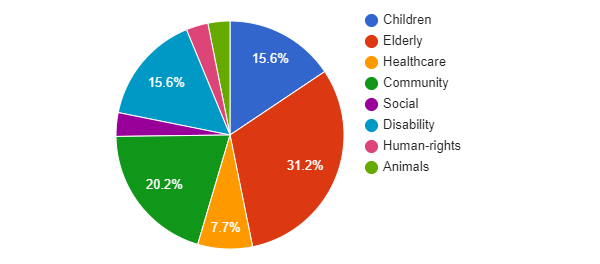
Here are the categories of charities Sheffield has supported:


Not only were these direct donations to charities, but some also involved extreme challenges such as a 100km Challenge, an 80ft Abseil and a 360-mile running challenge. Showing that those in Sheffield are not only generous but courageous too.

Philip Webb, Managing Director of Investors in Community, comments:

“These past few years have brought a huge number of challenges for people across the world with so many events cancelled, and fundraising opportunities limited, so we are delighted to see such an incredible amount raised for charities in the Sheffield region. We hope to continue to see this number grow and be matched across all cities in the UK.”

We are so grateful to everyone who’s generously supported charities via the Investors In Community Platform, but there’s still more that can be done. To donate to a good cause today, visit www.investorsincommunity.org


James Timpson: “Companies Should Put Charitable Works on The Front of Their Accounts”

James Timpson’s recent article in the Times shows how businesses can and should incorporate charitable giving into their company structure.

In this article, James discusses how important it is to start the right way when exploring Social Impact. At Timpson’s in particular, they began supporting foster families, as this had a personal connection for James whose parents were foster carers themselves. They later moved on to recruiting prisoners, giving them a second chance, and found that in doing this, they solved their recruitment problems at Timpson’s. When involving their colleagues in these initiatives, they found that they engaged most when encouraged to support their local community, so the impact was right in front of them.

Another interesting point brought up was how businesses benefit from these changes in more ways than you’d expect, James states that: “motivating colleagues to use their skills outside the business helps to broaden their experience and improve morale.” Investors In Community has seen the same outcome for early adopters of the IIC platform, when staff were engaged in projects and good causes, they felt passionately about, they felt more engaged and appreciated at work.

It’s clear that Timpson’s knows that Social Impact is no longer a “nice to have” it is an essential part of good business, and more people are calling for businesses to be more transparent about their giving. No longer do we hide this on page 163, this is a page one priority.

Start your businesses Social Impact journey today: https://investorsincommunity.org/


100 Fundraising Ideas!

  1. Firewalk  – Kicking off with a crazy challenge that is not for the faint of heart: walking across a path of fire for charity, this one is sure to get people interested in your fundraising initiative.
  2. Raffle – Ask for donations of items in your community if you’re a charity or as a business, make the prize an extra days holiday or a dinner for two voucher, people will definitely be interested in giving it a go!
  3. Hike – Don those hiking boots and get walking! Find interesting local walks and commit to hiking 30 miles in one month, ask friends and family to sponsor you, and if you’d like to make it even more interesting, try finding some tricky trails to send photos and videos to your sponsors of you tackling a tough trek!
  4. Dog Show – Get all the dog owners in the area to bring out their pooches for a fun day of showing off their tricks and who can make the cutest puppy face. Raise funds by asking the community to pay a small fee to attend.

  1. Abseil – Everyone loves to see people taking on insane challenges, you could abseil 80 feet off of the Monsal Trail bridge in the Peak District, trust me, a lot of people would pay to see it!
  2. Community Colour Wall – Grab your colleagues, your neighbours and friends and decide a wall to paint in the community, each person pays £2 to add their mark and by the end of the fundraiser you have a one of a kind art piece in your community and some pretty great funds raised for your chosen charity!
  3. Dress Down Day – Do you have a mandatory uniform at your work? Ever considered having a casual day? Well why not do some fundraising in the process! Ask employees to donate £1 to come to work in comfy, casual clothes and donate all the proceeds to charity.
  4. Head Shave – This is one for the bold people out there. Trust me, you will definitely get some sponsors out of it!
  5. Game Night – Host a community game night and ask for donations to join in on the fun!
  6. Bake Sale – What better way to raise money for charity than to bake some delicious treats and sell them to colleagues and friends. You could add some fun twists like baking without a recipe or having a theme to make the whole challenge more exciting!


Download our graphic above to read the rest!


Wakefield Community Raises £901 For Local Foodbanks!

Wakefield is leading the way and uniting purpose through their campaigns to support their community and for their most recent project they raised £901 for local foodbanks.

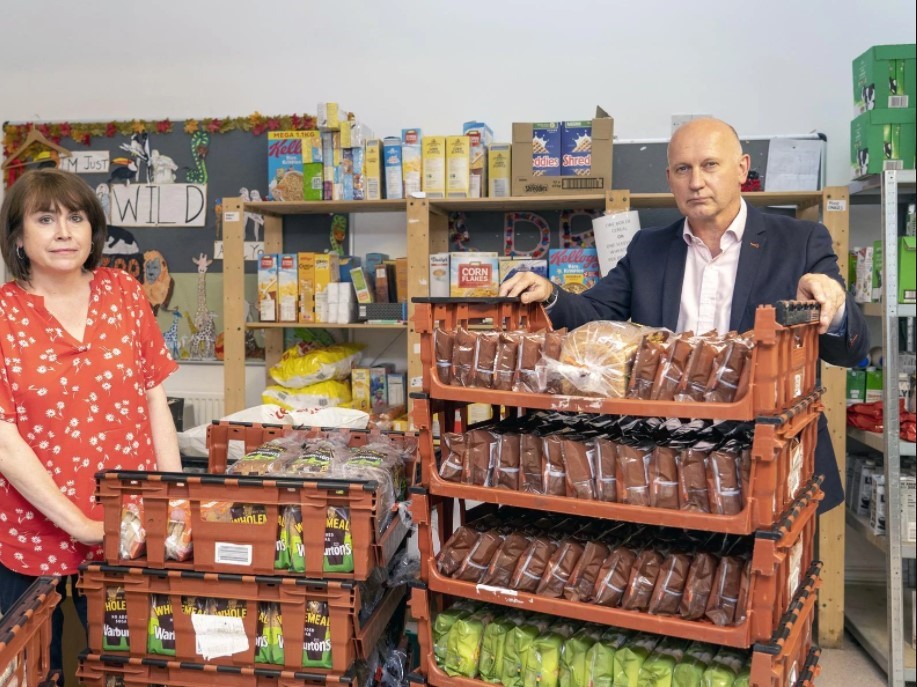
In Wakefield district there are 35 food banks, these foodbanks provide food and household items to hundreds of local families in their time of hardship. The foodbanks support needy families all year round, therefore, there is a need for donations, all year round, for them to purchase the items that are needed and your generous donations through the Investors in Community platform enable them to do that.


Have you booked your Christmas party yet?

It’s a tricky call to make this year and we’ve got the perfect solution to keep your team safe, connected and make sure they have a night to remember!

Bring together your team this Christmas with our specially created Virtual Christmas Parties, whilst raising money for charity!


Why should I have a virtual Christmas party?

  • Keep everyone safe, leave no one out
  • Invite 100s of guests; colleagues and customers
  • Save your pocket and the planet with the greener way to party
  • Avoid disruption with potential restrictions
  • Support good causes and help others as a team
  • Choose from three fantastic packages including professional entertainers, mixologists, wine experts, comedians and dancers who will have your guests making memories they’ll talk about all through 2022.


Best of all, you’ll be giving back!

We will support you as you choose your cause and set up your fundraising project in advance of the event, with marketing support to extend the reach of your project to maximise your fundraising efforts and then we will report back on the real impact you’ve made to your local community.

For each guest that attends your event £10 donation will automatically be donated to your chosen charity or good cause.

Furthermore, the first £100 raised outside of the £10 donations per event attendee will be match funded by Investors in Community.

Full details can be found here: https://investorsincommunity.org/virtualchristmasparty/

Our parties are booking up quickly now, contact us now if you would you like to know more. Our team are available for a call to discuss this anytime!

Contact: Faye Mower

Email: faye.mower@investorsincommunity.org

Contact: Louise Richardson

Phone: 07931 778 147
Email: louise.richardson@investorsincommunity.org


We thought we would share some amazing charities with you as well!

Save The Children

Save the Children, was established to improve the lives of children through better education, health care, and economic opportunities, as well as providing emergency aid in natural disasters, war, and other conflicts. Support them here.

In Kind Direct

We believe everyone deserves access to life’s essentials and that no usable product should go to waste. In Kind Direct is the UK charity distributing consumer goods donated by companies to UK charitable organisations working in the UK and overseas. Support them here.

The Charity Shop Gift Card

The Charity Shop Gift Card works to bring sustainable fashion and social value to the high street. But our commitment to doing good doesn’t stop there. Support them here

Teenage Cancer Trust

Every day, seven young people aged 13-24 hear the words “you have cancer”. They will each need specialised nursing care and support to get them through it. We’re the only UK charity dedicated to meeting this vital need – so no young person faces cancer alone. Support them here.

Bodie Hodges Foundation

Our Vision is to give hope to families bereaved of a child by providing a range of services that support grieving families and encourage them to rebuild and remember. Support them here.

Join Investors In Community today to deliver your social impact and align with your purpose.