Social Value used to be something businesses talked about. In 2026, it’s something they’re measured on.
Whether you’re bidding for work, trying to stand out in your sector, or simply doing your best to support your community, Social Value is now firmly part of how businesses grow, compete and differentiate themselves.
But for SMEs, the biggest challenge is often the same:
“Where do we even start?”
This guide breaks it down so you can understand what Social Value means for your business and how to do it well.
1. What Social Value actually means in 2026 (lets keep it simple)
Social Value is the positive impact your business creates beyond profit.
It’s everything you give back through:
- Volunteering
- Donations
- Pro bono work or skills sharing
- Gifts in kind
- Community support
In the past, this was nice-to-have.
In 2026, it’s something buyers, customers, employees (and even your value chain) expect you to demonstrate with evidence.
2. Why SMEs need to pay attention right now
A few years ago, Social Value felt like a “big company thing.” This changed fast.
Here’s why it now affects SMEs just as much:
• Public sector procurement now requires it
From October 2025, Social Value carries a mandatory weighting under PPN 002.
Even small contracts expect measurable impact.
• Your value chain needs your data
Even if you aren’t bidding, your customers might be and they’ll need your Social Value data to stay compliant.
• Customers and employees expect it
Workplaces with purpose attract and retain better talent.
Consumers buy from businesses that do good.
• Your reputation depends on it
Businesses who can prove their Social Value stand out.
Those who can’t risk falling behind.
3. The real returns of doing Social Value well
Doing good is great. But doing good strategically is even better.
When SMEs track and measure their Social Value, they see gains in:
1. Team engagement and retention
Employees (especially the younger generation) want to work for companies that give back.
2. Tender success
Being able to show verified Social Value can unlock more contracts and higher scores.
3. Stronger value chains
You become a more attractive supplier when you support their Social Value reporting.
4. Brand credibility
Sharing verified impact builds trust with customers and stakeholders.
5. Profitability
Purpose-led businesses outperform their peers and that’s backed by data.
Social Value is a growth engine when measured properly.
4. What you actually need to track
Here’s where most SMEs get stuck because they assume Social Value means paperwork.
It doesn’t.
You only need to track:
- Hours volunteered
- Donations made
- Skills or pro bono support
- Gifts or surplus items
- Community projects supported
Each activity creates measurable impact.
When verified by the receiving organisation, it becomes fully reportable Social Value.
5. The biggest mistake SMEs make
Giving without tracking.
Most SMEs already do great things like charity days, fundraising, donating skills, but then forget to record them.
The result? Lost impact, lost evidence, lost opportunity.
If it’s not measured, it doesn’t count in procurement, ESG, or awards.
6. The 2026 solution: Make Social Value easy (really easy)
SMEs don’t need teams, consultants, or hours of admin.They just need one thing:
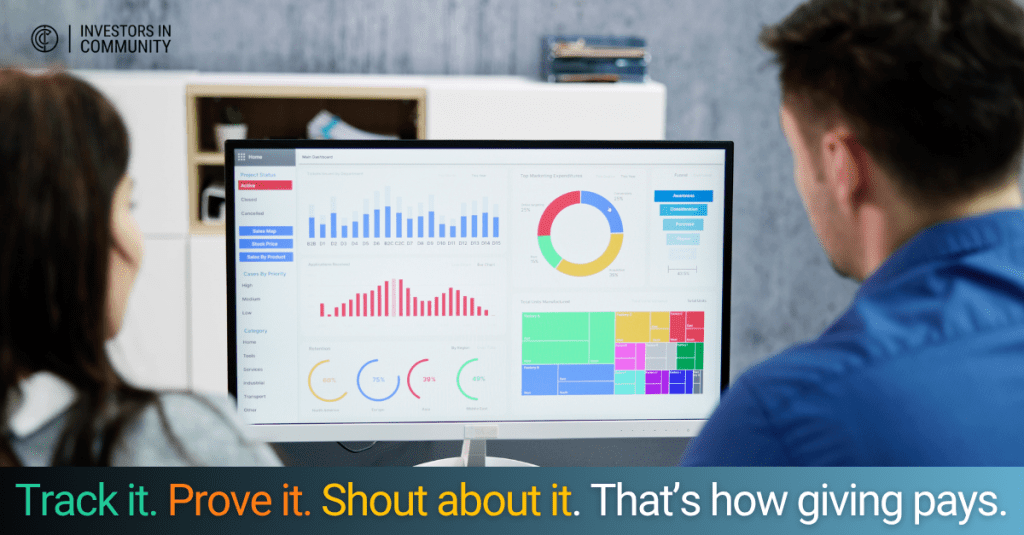
An easy way to log, measure, verify and report Social Value in real time.
That’s exactly what the Investors in Community (IIC) platform was built to do.
With IIC, SMEs can:
- Track every act of giving
- Verify it with the charity or community organisation
- Generate real-time, trusted reports
- Earn Community Credits™ – a standardised Social Value score
- Meet procurement requirements
- Support value chain reporting
- Strengthen ESG outputs
- Engage employees with purpose
It’s simple, affordable, and designed for SMEs who don’t have time for complexity.
7. Community Credits™ – your Social Value scorecard
Community Credits™ convert your giving into a consistent, measurable unit.
1 hour volunteering = credits
£10 donation = credits
Gift of goods/services = credits
Verified by the charity or organisation = officially counted
This is powerful because:
- It gives you a recognised, quantifiable impact score
- You can compare impact month-on-month
- You can share it with buyers, value chains and auditors
- You can celebrate it internally with your team
Social Value finally becomes visible.
8. How SMEs can get started in under 10 minutes
Here’s the simplest roadmap you’ll find:
1. Create an IIC business profile (£150 per year)
2. Add your team members
3. Start logging what you already do
4. Explore local charities on the marketplace
5. Share verified reports internally and externally
That’s your Social Value strategy sorted.
9. The bottom line: Social Value isn’t optional in 2026…but it can be your advantage
Most SMEs will treat this as paperwork. But the smart ones will treat it as a strategic necessity.
Because Social Value done well:
- Wins contracts
- Attracts talent
- Builds reputation
- Strengthens value chains
- Enhances ESG
- Drives real business growth
And with IIC, it finally becomes simple.
Ready to make Social Value your advantage?
You don’t need complexity.
You need clarity, proof and a platform that does the heavy lifting.