Preloader Image

Hull came together to turn good intentions into real change

On 19th November, Investors in Community (IIC) brought together some of Hull’s most committed businesses, charities and community leaders for an afternoon focused on one thing: turning good intentions into something real.

Hosted at the John Good Group HQ in Hessle, Profit Meets Purpose gave charities the space to talk openly about what help they need, gave businesses the chance to share what meaningful partnership looks like from their side and brought everyone into the same conversation (something that rarely happens in one room).

Where honest conversations sparked real collaboration

It was candid, energetic and refreshingly purposeful, with every speaker and attendee focused on practical action

Charities admitted where they feel stuck.
Businesses shared what they actually needed to know in order to help.
And everyone left with ideas they could act on.

One point kept coming up: Charities often don’t know how businesses want to be approached and businesses aren’t always sure what charities genuinely need.

Emily Blake, IIC’s Charity Relationships Coordinator, said it best:

“It was powerful seeing businesses and charities speaking honestly with each other, breaking down the fear of asking, the confusion around impact reporting and the pressure charities feel to ‘get it right’. These conversations don’t normally happen in one room.”

What businesses said matters most

Adam Walsh (John Good Group), Mark Burley (Keepmoat) and Laura Porter (Connexin) were clear:

Passion is important, but proof is what moves partnerships forward.

Matthew Wright (RSPCA Hull & East Riding Branch) summed it up:

“Businesses want to support charities, they just often struggle to find the right partner.
Platforms like IIC will absolutely bridge that gap and capture the real outcomes.”

Businesses want to know:

  • What’s the need?
  • What’s the impact?
  • How do we prove it?

Clear stories and measurable outcomes make all the difference.

What charities said they need help with

Many charities shared that it’s not willingness holding them back, it’s time, confidence and capacity.

Kirsty Clark (Matthew Good Foundation) highlighted that lots of small charities simply don’t know how to present their impact in a way that supports a business’s ESG or procurement needs.

That gap exists, but it’s one we can close with support, better tools and open conversations like these.

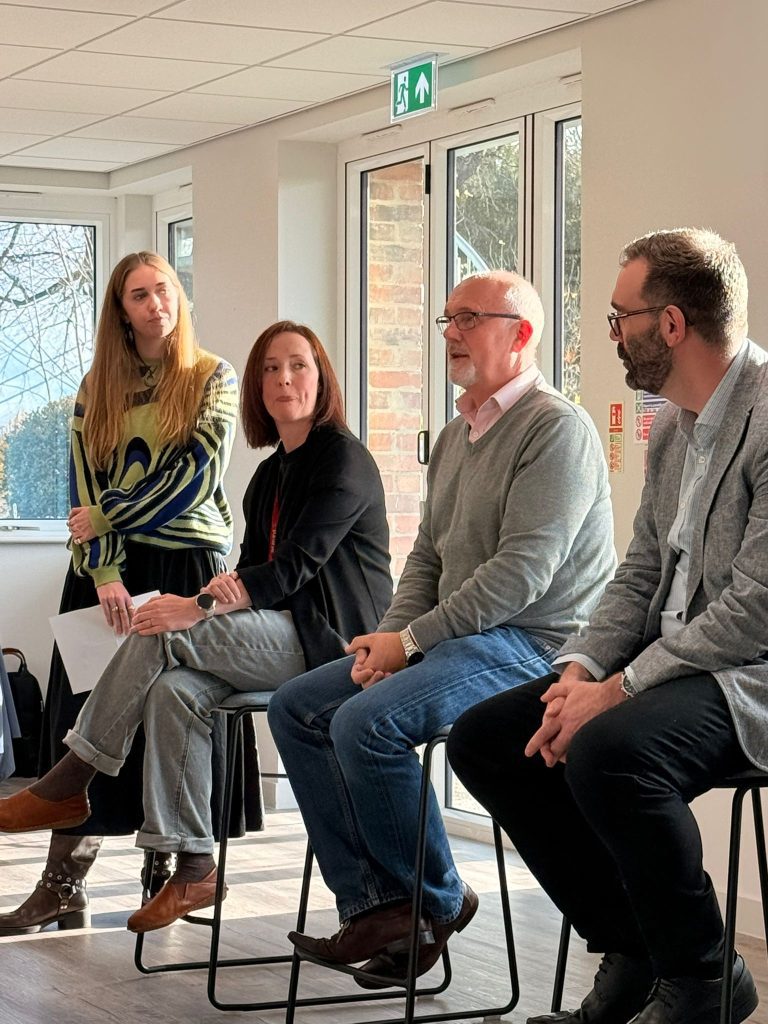
room of people with their backs to the camera looking at a panel of 4 people
Charity panellists addressing the room

Why offering different ways to give matters

Charities spoke about how important it is to offer more than one route for businesses to help, whether that’s:

  • sponsoring assets (such as kennels at the RSPCA)
  • running community cafés
  • offering staff skills
  • donating time or goods

When charities diversify how people can support them, more doors open and more pressure is lifted.

Emily put it perfectly:

“This event created a room of people who all want to do good and want to act quickly.
The connections made here will go far beyond today.”

What attendees said

The feedback says everything:

“Probably the single best event I have ever attended for meeting change makers.”
Asa Hancock, HET

“Impact and commercial performance are now completely intertwined.”
Jonathan Wragg (Ltt Group Ltd)

“A great event with great people. I came away with things to put into action.”
Chris Salt, Candlelighters Trust

“It was inspiring and exciting to see connections developing.”
Gill Emerton, Matthew’s Hub

“I learned a lot… so interesting hearing from the two panels from both sides of the same coin.”
Chloe Eliska Lawford, Sirius Homecare

A side on view of a Group of people sitting at tables and chairs looking towards the front of a room, listening
Profit Meets Purpose event, 19th November 2025

What happens next

This is only the beginning.

Hull now has a growing network of businesses and charities ready to collaborate, share knowledge and build stronger social value together, backed by IIC’s platform to track, verify and report the impact.

For businesses, this is a practical route to stronger ESG performance, better engagement and clearer reporting.

For charities, it means new partners, new opportunities and more confidence sharing the impact they create.

And for Hull, it marks the start of a more connected, more resilient local community.

Philip Webb, IIC CEO, summed up the feeling in the room:

“Events like this show what can happen when local businesses and charities collaborate with purpose. Measurable social value isn’t just good for communities, it’s good for business, culture and long-term sustainability.”

If you’d like to collaborate with IIC to run something similar in your area, or want to join the next Hull event, follow Investors in Community or get in touch.

Social value is about to get serious: are you ready?

From October 1st, every public sector contract in the UK will have to take account of social value in the award process. That’s thanks to the updated Social Value Model under Procurement Policy Note (PPN) 002.

Sounds niche? It’s not. If you supply to the public sector (whether you’re a multinational or a small business) this change could affect you.

Until now, social value in procurement has been a nice-to-have. A box to tick. From October, it’s mandatory. Buyers will have to score your bid not just on cost and quality, but also on the social impact you bring.

What counts as social value?

Think:

● Are you supporting your local community?

● Are you creating jobs and skills?

If you can prove it, you’re in a stronger position to win. If you can’t, you could lose out – even if your price is competitive.

Why SMEs and supply chains should care

You might think: “We’re only a small business, this doesn’t apply to us.” But public sector procurement isn’t just about billion-pound contracts. Councils, NHS trusts, schools, and local authorities buy from SMEs every single day.

And here’s the kicker: if you’re in the supply chain of a bigger company that bids for public contracts, they’ll soon be asking you for evidence of your social value too.

So whether you’re front and centre on a tender, or part of someone else’s supply chain, you need to be ready.

How do you prove your social value?

It’s not enough to say you do good things. From October, buyers will want measurable outcomes. The Social Value Model sets out five key themes:

1. COVID-19 recovery

2. Tackling economic inequality

3. Fighting climate change

4. Equal opportunity

5. Wellbeing

If you can show practical action in these areas (and put numbers against them), you’ll stand out.

How to measure and report social value

The good news? This doesn’t need to be complicated. With the right platform (hello, IIC), you can log, measure, and report your impact in a way that buyers trust. Whether you’re planting trees, volunteering hours, or making donations, you’ll have the data to back it up.

What to do next

Don’t wait until October to figure this out. Start embedding social value measurement into your business now – before your competitors do. Because when the new rules land, the companies that can show proof will have the edge. And those who can’t? They’ll be left scratching their heads, wondering why they didn’t get the contract.

Social value belongs in every boardroom and every bid. Whether you’re a maincontractor or part of a supply chain, the message is the same: prove your impact, or prepare to lose out. At IIC, we help businesses of all sizes turn giving into growth.

When does giving pay you back?

A straight-talking look at the real ROI of Social Value

The big question: why give?

Let’s not sugar-coat it: in business, the word “give” usually sets off mental alarms about cost, not value. But what if giving (time, money, gifts, support) paid you back? Not in karma points or good vibes (though you get those too), but in cold, hard business ROI.

We’re talking staff engagement, revenue growth, profit uplift and brand love. Let’s take a look at the real returns from Social Value giving and whether you’re doing it right… or just ticking boxes.

1. Giving comes in more flavours than you think

Social Value giving isn’t a one-size-fits-all gig. Think of it as a portfolio:

  1. – Time: Volunteering, mentoring, skills-based support
  2. – Gifts: Products, services, giveaways with purpose
  3. – Money: Donations, matched funding, community grants

Each one builds a different bridge – to your people, your community and your customers. The win? When that bridge starts driving business growth.

An image split into three vertical columns. The left image is of a bearded man with glasses smiling and shaking hands with someone across a laptop. The middle image is of a man with red hair and wearing a knitted jumper looking down and smiling at his hand which is holding hay. The right side image is of a young woman explaining something with her hands gesturing - she is looking towards a laptop which is off camera, and an older man is in the background smiling. Across the bottom is a purple and blue gradient banner with the words "cash is just one way to give. Time and skills? That counts too.

2. What’s in it for you? The ROI of doing good

Strong team engagement

People want to work somewhere that gives a damn. Businesses with a Social Value mindset see:
– Higher retention (especially Gen Z and Millennials)
– More productivity (people go the extra mile when they care)
– Better hiring results (because your brand values speak volumes)

Revenue that reflects your purpose

Yes, purpose sells.
– Consumers are 4x more likely to buy from brands with values
– B2B clients now expect Social Value data in procurement.
The real return on giving? Growth, loyalty and sales. 

Profits with purpose…and proof!

Worried that giving costs too much? It doesn’t, if it works. 

– Lower churn = less hiring costs
– Higher tender scores = more wins (Social Value scores now carry legal weight in UK bids)
– Loyal customers = longer-term value

A brand people believe in

Social Value transforms blasé brands into real ones. It gives your team stories to tell, your partners

A close up view of a target with an arrow hitting the bullseye which is the Investors in Community symbol. Along the bottom is a black and orange gradient with the words "Purpose sells. And it boosts sales, too

3. The harsh truth: most businesses give…meh

Here’s the tough love. You donate. Volunteer. Sponsor the odd event. But then what? No tracking. No storytelling. No link to strategy.

It’s like planting seeds and never watering them.

So the ROI? Gone.

Two bucket-style plant pots, one pale purple, one mint green. Both have brown unwatered plants in them. Along the bottom is a purple and blue banner with the words "If you're giving and forgetting, don't expect results.

4. Want to flip that? Here’s how. 

Imagine this:

– Every hour your team gives is logged.
– Every pound donated is traced to real impact.
– Every act of goodwill becomes a story, a KPI, a tender advantage.

This is giving that works as hard as you do. 
That’s where platforms like Investors in Community come in. ( Not a plug. Just facts.)
We help businesses prove, improve, and promote their Social Value so the giving actually gives back.

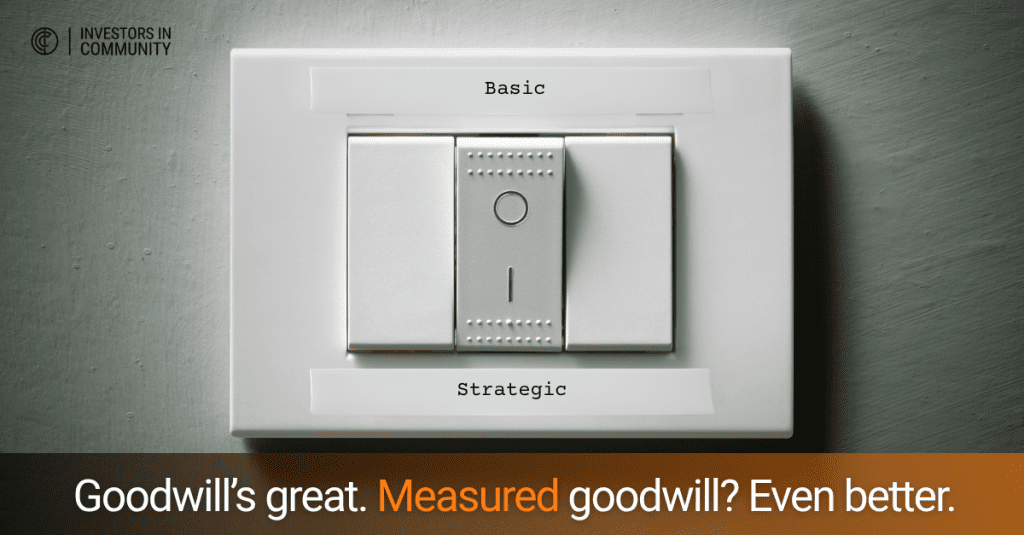
A close up image of a light switch. The off button is labelled "basic" and the on button is labelled "strategic". A black and orange banner runs along the bottom with the words "Goodwill's great. Measured goodwill? Even better.

5. Audit. Accelerate. Win.

– What do you give now? Is it tracked? Tied to business outcomes?
– Set clear metrics: connect giving to staff engagement, tenders, retention.
– Go digital: streamline, track, report.
– Tell the story: Your team and your clients want to see it. Show them.

 Two people with their backs to the camera looking at a computer screen displaying a digital dashboard with colourful charts and graphs. Along the bottom is a black and blue gradient banner with the words "Track it. Prove it. Shout about it. That's how giving pays.

Final Word

Giving, when it’s strategic and well-managed, becomes a growth engine. With the right approach, Social Value fuels loyalty, drives revenue and strengthens your reputation.
So… when does giving pay you back?

When you give with purpose, track with precision and tell the story like a boss.

Dialling it back to basics with Investors in Community

Let’s be honest. Social Value can feel like just another thing on your to-do list.

For many small and medium businesses, it’s hard to know where to start. You want to give back, support your community, and do it in a way that actually makes sense for your team and your bottom line.

That’s where we come in.

At Investors in Community, we make Social Value easy, affordable, and worth your time. There’s no jargon, no extra admin and no big CSR team required.

Here’s how it works:

One platform for all kinds of giving

Donations, volunteering, fundraising, skilled support and even gifts in kind are all in one place.

Why it matters: No more juggling spreadsheets or trying to pull together proof. With IIC, everything sits on a single, easy-to-use dashboard.

Track, verify and report (quickly!)

Our platform lets you:

  • Connect with charities and community groups
  • Track every hour, donation, and gift
  • Get verified reports in real time

Why it matters: Whether you’re reporting to a board, a bid team, or just trying to understand your impact, your data is available to see clearly and instantly.

Earn Community Credits (your social value score)

Every act of giving earns digital credits, based on time or money donated. Once the charity confirms the activity, it’s verified.

Why it matters: Use these credits in ESG reports, tenders, internal awards, or public comms — it’s a clear, measurable way to show what you’ve done.

Transparent pricing that makes sense

You pay per employee. That’s it.

No hidden fees, no hefty setup costs. Charities always use the platform for free.

Why it matters: It’s cost-effective, scalable, and means your money goes straight to where it’s needed.

Tools that actually help

With the Investors in Community platform, you can:

  • Set up team volunteering
  • Approve or manage initiatives in real time
  • Encourage participation with leaderboards or rewards

Why it matters: You get more control, better engagement, and real momentum behind your giving.

A full solution to tracking all of your giving

On the platform, you can:

  • Find local causes that need help right now
  • Add your own projects or ideas
  • Collaborate with other businesses or partners
  • See clear impact from start to finish

Why it matters: No more guesswork. Just purposeful action, all in one place.

Why it works for SMEs, HR teams and CSR leads:

  • Clear returns — measurable, meaningful impact
  • Better engagement — people want purpose at work
  • Reputation boost — communities trust companies that give back
  • Time and cost savings — less admin, more action

In shortInvestors in Community is a fast, affordable and thorough way to manage and measure giving.

Request a demo or explore the platform today. 

Let’s make Social Value something every business can do simply, clearly, and confidently.

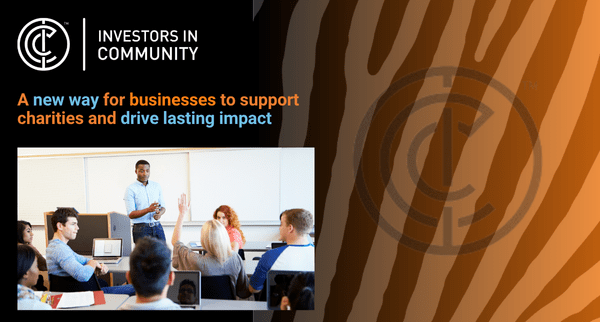
A new way for businesses to support charities and drive lasting impact

At Investors in Community, we know businesses want to make a real difference but traditional corporate giving often stops with donations and volunteer days. What if businesses could help charities grow stronger, more sustainable, and more impactful in the long run?

That’s exactly what the Transformation & Charity Support Programme is designed to do. By providing coaching, strategic support, and measurable impact reporting, IIC is taking corporate social responsibility (CSR) to a new level that creates lasting change for charities, businesses, and communities. 

Why this programme? Why now?

Many charities operate on shoestring budgets, relying heavily on fundraising, donations, and volunteer support and without the right strategic foundations, long-term growth can be difficult. At the same time, businesses want to invest in communities in ways that align with their values, but they often struggle to see the direct impact of their contributions.

This programme, led by expert coaches Jo Thackwray & Lyn Page, bridges that gap. By working through the IIC platform businesses can now invest in charities in a structured way, ensuring their contributions result in real, measurable, and sustainable change.

How does this programme help charities thrive?

Charities taking part in the Transformation & Charity Support Programme receive structured, expert-led support to help them grow, increase their impact, and plan for long-term sustainability.

Through six interactive sessions, charities get practical guidance on defining their mission, measuring impact and demonstrating the value of their work. Leadership and people management are key areas of focus, helping charities build a strong team culture, improve volunteer engagement, and reduce the risk of burnout.

Charities also gain essential financial skills, learning how to budget, develop fundraising strategies, and plan for sustainable growth. This gives them the confidence to secure funding and manage their resources effectively.

The programme helps charities think beyond the day-to-day, with strategies to scale, diversify income, and build long-term resilience. By the final session, each organisation leaves with a clear, practical roadmap for growth, ensuring they can continue making a lasting impact in their communities.

A smarter way for businesses to make a real impact

Businesses want to make a real impact, but finding the right approach can be challenging. This programme provides a structured way for businesses to contribute meaningfully, with measurable results that drive lasting change.

Businesses using the IIC platform can make a measurable difference by supporting a charity’s long-term growth. They’ll receive:

✅ Impact reports that clearly show how their contributions are making a difference.
✅ Stronger connections with charities, building meaningful, long-term partnerships.
✅ Full visibility of CSR efforts, aligning with ESG (Environmental, Social, and Governance) goals.
✅ Employee engagement opportunities, allowing staff to contribute in a way that delivers real results.

This programme helps businesses move from short-term giving to lasting change, creating real benefits for companies and communities.

Why Investors in Community?

At IIC, we make corporate social responsibility clear, measurable, and sustainable. This programme takes it a step further by helping businesses and charities build lasting partnerships rather than focusing on short-term giving. By connecting charities, businesses, and expert coaches we’re facilitating long-term social impact and ensuring every contribution leads to meaningful change.

Join the movement

If your business wants to create real, long-term impact, this programme provides a clear way to make a difference. It helps charities grow and become more sustainable while strengthening your CSR strategy with measurable results. Through the IIC platform, you can track and report on your social impact and build meaningful connections with the charities you support. Take the next step in corporate social responsibility and be part of something that creates lasting change.

How social impact drives business success

Social impact is a powerful strategic driver for success. When companies embed social impact into their core operations, they experience a range of benefits that go well beyond good publicity. In this article, we’ll show you how social impact can become a powerful catalyst for growth and long-term success for your business.

Building brand loyalty and trust

Customers and stakeholders are increasingly choosing to support businesses that demonstrate a genuine commitment to social impact. By aligning with causes that matter, companies build loyalty and trust among customers, which can lead to increased brand affinity and repeat business. When businesses can authentically show that they’re making a difference, it resonates with socially conscious consumers.

Attracting and retaining top talent

People want to work for companies that share their values and commitment to social responsibility. A strong social impact strategy can set a business apart in the competitive job market, helping to attract high-calibre employees who are motivated to contribute to a purpose-driven culture. Retention rates improve too, as employees who feel they’re making a positive impact are more likely to stay.

Enhancing operational efficiency

Integrating social impact streamlines operation, as well as reaping the rewards of external benefits. Socially responsible businesses often have clearer governance structures and policies, which translate into more efficient operations. The Investors in Community (IIC) platform, for instance, allows businesses to manage, track, and report on their social impact activities, saving time and reducing the administrative load.

New market opportunities

A commitment to social impact can open doors to new partnerships and client bases. Businesses with strong social value credentials are often favoured in procurement processes and by investors. In fact, many investors now consider a company’s social impact as part of their decision-making criteria. By adopting transparent and verifiable social impact practices, businesses can expand their market reach and appeal to a broader audience.

Mitigating risks and strengthening reputation

Social impact initiatives contribute to risk management by helping businesses avoid reputational damage associated with unethical practices. Platforms like IIC provide transparency and verification for social impact activities, which helps businesses steer clear of greenwashing and demonstrate genuine commitment. A strong reputation in social value can be a buffer against future challenges, safeguarding the business’s long-term viability.

How the IIC platform supports social impact

The Investors in Community platform provides a structured, transparent way for businesses to manage their social impact journey. By tracking all types of contributions, from donations to volunteer hours, businesses can see the tangible benefits of their efforts, both for the community and their own success. With IIC’s streamlined reporting and Community Credits system, every act of giving is measured, rewarded, and available for stakeholders to view.

Take the first step towards impactful success

Social impact is a pathway to sustainable growth and success. Discover how your business can enhance its operations, build brand loyalty, and drive growth through social value. Visit our website or book a demo with IIC to learn more about integrating social impact into your strategy.

How your employees’ experiences influence their charitable giving

Personal experiences and social networks play a crucial role in the charities your teams choose to support through giving. It makes perfect sense that, when individuals witness or experience a cause firsthand, they are more likely to donate and encourage others to do the same. Your businesses can harness this power by encouraging the individuals in your teams to share their giving stories, building a culture of generosity and engagement.

How you can encourage story sharing

Businesses can:

  • Create internal platforms for employees to share their experiences.
  • Highlight individual stories in company newsletters or meetings.
  • Organise events where employees can discuss their charitable activities.

Sharing these stories can inspire others to get involved and highlight the personal impact of charitable actions.

The hidden impact of employee giving

It’s really likely that a number of individuals in your business will be actively engaging in charitable activities outside of work, such as volunteering, pro bono work, gifts in kind, fundraising, or making personal donations. However, companies often lack the tools to record, measure, and report these contributions. According to a study by Charities Aid Foundation, 62% of employees prefer working for companies that support and encourage giving back to the community. This indicates a significant portion of your workforce is likely already contributing to social good in various ways.

How the IIC platform can work for you

The Investors in Community (IIC) platform can help businesses bring these hidden contributions to light. By using the IIC platform, businesses can:

  • Record all forms of employee giving, from volunteer hours to pro bono work.
  • Measure the impact of these activities through detailed, real-time reports.
  • Report on the collective social impact of the organisation.

This not only boosts employee morale but also demonstrates the company’s commitment to Social Impact. By leveraging your employees’ personal connections to charities and their experiences, you can improve your business’ culture of giving and can enhance your overall social impact.

Take action

How is your business capturing the hidden Social Impact of your employees’ charitable giving for good? Discover how the IIC platform can help you record, measure, and report on all forms of giving, creating a transparent and impactful CSR strategy. Get in touch to find out more.

Admin stuff

Meta Description: Discover how personal experiences and social networks influence charitable giving and how businesses can leverage this through the IIC platform to build a culture of generosity and measure social impact effectively.

Keywords: charitable giving, social impact, employee engagement, personal experiences, social networks, volunteering, pro bono work, Investors in Community, community engagement, social responsibility, business giving, IIC platform

LinkedIn/GMB Post

It makes perfect sense that your employees are more likely to support a cause they feel personally connected to. Through sharing their experiences with colleagues, it can build a stronger culture of giving in your business, and inspire others to get involved. 

But how can you record, measure and report on these acts of kindness? Well that’s where the IIC platform comes in. Take a look at our article and if our suggestions resonate with you, get in touch with us!

#SocialImpact #EmployeeEngagement #CharitableGiving #CommunitySupport #BusinessImpact #IIC

The benefits of giving beyond monetary donations

There’s no doubt that businesses and individuals are feeling the pinch. What might surprise you is that in 2023 there was a record £13.9 billion donated to charity by the UK public (up from £12.7 billion in 2022). It will be fascinating to see if the figures continue to rise during 2024, but while financial donations remain essential, it’s important to recognise the significant impact of non-monetary contributions. Good people still want to do good, even if they can’t afford to donate as much money as they would like to. 

We’re going to take a look at the various ways to give and how these contributions can be just as valuable, if not more so, in times of economic hardship.

Volunteering time and skills One of the most powerful ways to give back is through volunteering. Businesses can encourage their employees to volunteer their time and skills to local charities and community projects. Whether it’s providing professional expertise, participating in community clean-ups, or mentoring disadvantaged youth, these efforts create tangible benefits for those in need. People feel great when they help others, and NCVO’s 2023 Time Well Spent survey illustrates this, with volunteers reporting positive impacts on their lives such as enjoyment (89% of respondents), making a difference (89%), a sense of achievement (88%) and increased social connection (87%). Volunteering builds a sense of purpose and engagement among your teams, boosting morale and building stronger connections within the community.

Donating goods and services Another impactful way to contribute is by donating goods and services. Businesses can offer surplus inventory, office supplies, or even pro-bono services to charities and community organisations. For instance, a marketing firm could provide free advertising services to a local non-profit, or a restaurant could donate meals to a homeless shelter. These contributions can significantly alleviate operational costs for charities and enable them to direct more resources towards their core mission.

Engaging in community projects Businesses can play a vital role in local community projects. From sponsoring local events to participating in neighbourhood improvement initiatives, businesses can use their influence and resources to drive positive change. This type of involvement builds connections with a business’ local community and strengthens its reputation and relationship with local stakeholders.

Employee-driven initiatives Encouraging employees to spearhead their own charitable initiatives can lead to creative and impactful ways of giving. Businesses can support these efforts by providing resources, time, and platforms for employees to organise fundraisers, charity drives, or awareness campaigns. This approach empowers employees, builds a culture of giving, and generates diverse ideas for community support.

Leveraging the IIC platform Investors in Community (IIC) offers a comprehensive platform to manage, measure, and report all forms of giving. Businesses can use the IIC platform to record volunteer hours, track donated goods and services, and report on community project involvement. The platform’s Community Credits system quantifies these contributions, providing a tangible measure of Social Impact. This transparency builds trust with stakeholders and showcases the real impact of the business’s social responsibility efforts.

Measuring tangible impact The IIC platform enables businesses to see the direct results of their non-monetary and financial contributions. Detailed reporting tools help businesses understand the value of their efforts and communicate this impact to employees, customers, and investors. By highlighting the breadth of their social impact, businesses can demonstrate their commitment to sustainability and social responsibility, even in economically challenging times.

Giving is about so much more than just money. Businesses can still make significant Social Impact through volunteering, donating goods and services, engaging in community projects, and supporting employee-driven initiatives. The IIC platform helps businesses track and showcase these contributions, ensuring that every act of giving is recognised and valued. By broadening our understanding of giving, we can all continue to support our communities and create a positive social impact, no matter our financial situation.

Admin stuff

Meta Description: Discover how businesses can make a significant social impact beyond monetary donations. Learn about volunteering, donating goods, community projects, and how the Investors in Community (IIC) platform can help manage and measure these contributions.

Keywords: social impact, non-monetary donations, volunteering, donating goods, community projects, employee engagement, IIC platform, social responsibility, sustainability, business giving, community involvement

LinkedIn/GMB post

Despite the economic squeeze, last year the UK public donated a record £13.9 billion to charity. Giving isn’t just about the money, though. Businesses can significantly impact their communities through pro bono work, volunteering, donating goods and services, and engaging in local projects. Learn how the IIC platform can help you measure and report your teams’ contributions effectively, showcasing your Social Impact in a uniquely transparent way. 

How is your business making an impact beyond monetary donations?

#SocialImpact #CommunityEngagement #BusinessGiving #IIC #ESG

How Can I Effectively Spend my Year End Charity Budgets?

While the tradition of year-end generosity among UK businesses is commendable, a critical issue often arises as companies hurriedly allocate surplus budgets to charities in a bid to meet philanthropic commitments before the fiscal year concludes.

For many businesses, unspent charity budgets are often absorbed back into the P&L, and therefore lost. The perceived solution is to hurriedly find random charities to fulfil the philanthropy aims of the original purpose driven budget.

The problem lies in the scattered nature of these donations, as the urgency to utilise funds can result in a lack of strategic deployment.


The Challenge of Scattered Year End Donations:

Lack of Focus: The urgency to utilise surplus budgets before the fiscal year-end can lead to hasty decisions, causing companies to donate to a diverse range of causes without a clear focus or strategic alignment.

Limited Impact: Scattered donations may result in minimal impact on any single cause, as the funds are spread thin across various charities. This dilution diminishes the potential for creating substantial, long-lasting change.

Missed Opportunities: Charities receiving last-minute, scattered donations may struggle to plan and implement effective programs, missing out on the chance to optimize the impact of the funds received.


If you are a charity budget holder with surplus yet to be allotted, and would like to find a controlled solution, then help is at hand.

Investors In Community www.investorsincommunity.org is able to hold your donation in a charity wallet, that you can allot to your chosen good causes over the months or even years that follow your current year end.

By uploading your budget to your business profile wallet, it has in legal terms been donated to the Investors In Community Giving (IICG) CIO registered charity. The representation of the money sits in your business’s wallet, and you are able to then instruct the passing of this money to your chosen charities and good causes, whenever you want, in whatever denominations you choose.

The benefits are clear:

  1. You can select those causes that fit your evolving strategic aims, as opposed to reactively throwing the budget at a variety of charities as a means to commit to your CSR budget spend
  1. This can be done over your year end, as you have effectively donated to IICG charity, but you still control the funds for later deployment
  2. Better outcomes are then evidenced, by the thought-out donating, and a more defined Impact Statement can be had as a result
  3. All donations are tracked and measured, giving a full audit trail for your records

Use the IIC business wallet all year round, to control, measure, audit, and report all your community and charity giving.

This will save time and money in a single efficient process of managing, deploying, verifying and auditing your business’s generosity.

For more details, contact info@investorsincommunity.org